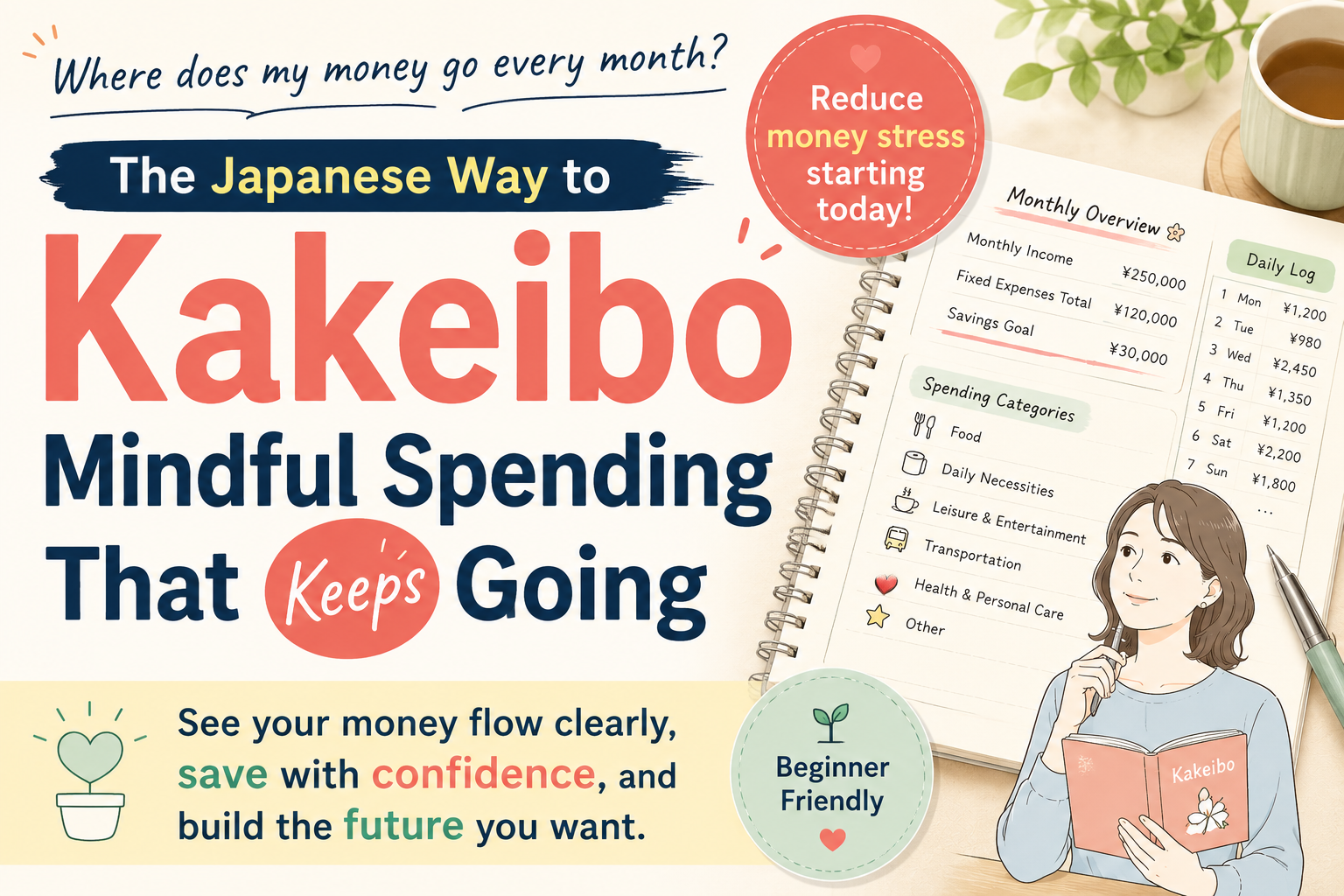
Many people struggling with household finances share the same problems: they do not know how much salary remains, cannot see where their money is going, or disagree with their spouse about spending.
The root cause is often the absence of a system that makes cash flow visible. This article introduces a budget-based method that uses multiple wallets or envelopes to divide money by purpose.
By combining cash and card payments, households can understand their finances and share the same picture without creating an overly complicated bookkeeping routine. We will begin by examining why household finances become difficult to see.
- Three Common Problems Caused by Poor Financial Visibility
- How a Budget-Based System Works: Four Points for Dividing Money into Wallets or Envelopes
- Budget Allocation by Category and the Role of Each Wallet
- Three Benefits of Sharing Household Finances Between Spouses
- Cash Management in the Card-Payment Era
- Improving Financial Literacy Across the Family Through Visibility
Three Common Problems Caused by Poor Financial Visibility
Many households lack a practical system for seeing how much is spent and on what. Recording every transaction in a conventional budget book creates a large psychological burden, so the attempt often ends after only a few days.
The first problem is not knowing where the money went. A salary arrives, yet almost nothing remains at the end of the month. Everyday spending is fragmented across groceries, gasoline, children’s lessons, and occasional impulse purchases. Each expense may appear small, but together they form a substantial total. Once a purchase is made, people often treat it as finished and stop considering its effect on the remaining budget.
Credit-card payments weaken that awareness further. Cash disappears immediately from a wallet, while card spending may not leave the bank account for several weeks. New purchases continue during that delay, making the overall flow difficult to understand.
The second problem is disagreement between spouses. One partner may be trying to save while the other spends freely, or one may manage the entire household while the other has little idea of the overall position. This creates conflict when major decisions arise, such as education costs or buying a home. The deeper issue is that the household’s current condition, available room, and financial weaknesses are not shared.
One partner may feel that spending was high while the other notices nothing unusual. Without a visible total, decisions are driven by mood and incomplete information.
The third problem is that card spending does not feel real. Digital payments are convenient, but they remove the physical limit that an empty wallet naturally creates. As a result, spending can exceed expectations before anyone notices.
All three problems come from the same cause: there is no system that naturally shows cash flow during daily life. The problem is not merely failing to keep a budget book. This is where a wallet- or envelope-based budget system can help.
How a Budget-Based System Works: Four Points for Dividing Money into Wallets or Envelopes
Budget-based household management divides salary by purpose and places the money in separate wallets or envelopes. The major advantage is that the flow becomes visible through the physical system itself rather than through constant recording.
The first point is to distinguish fixed and variable expenses. Fixed expenses include rent or mortgage payments, insurance, and utilities. These can remain in the bank account for automatic withdrawal. Variable expenses, such as food, leisure, and household goods, are the categories most suitable for separate cash budgets.
The second point is the allocation process after payday. First, leave enough money in the account for fixed expenses. Then withdraw the remainder and divide it among the predetermined categories. If take-home pay is 400,000 yen and fixed expenses are 200,000 yen, the remaining 200,000 yen can be allocated. Performing this once at the beginning of each month creates a regular rhythm and makes it easier for both spouses to share the same understanding.
The third point is to assign a clear role to each wallet or envelope. For example:
- Food and household goods: manage a fixed amount each week
- Leisure: restaurants, outings, and family entertainment
- Vehicle costs: gasoline, inspections, taxes, and repairs
- Ceremonies and gifts: irregular but predictable annual costs
- Cash savings: money reserved in advance for saving
Labeling every wallet or envelope improves visibility. The same idea can be applied to card spending so cash and digital payments remain part of one system.
The fourth point is checking the remaining amount at month-end. This shows whether food spending was too high, leisure spending was lower than expected, or a budget needs to be adjusted. Monthly patterns make the next allocation more accurate.
Because the system is physical, it removes much of the burden of daily bookkeeping and restores a sense of spending that digital payments often weaken.
Budget Allocation by Category and the Role of Each Wallet
There is no universally correct amount for each category. The allocation must reflect the household’s actual structure and values.
Fixed expenses can remain outside the wallet system. Rent, mortgage payments, insurance, and utilities should be reserved in the bank account and paid automatically. Securing these first makes the amount available for variable spending clear.
Food and household goods are central categories. They occur frequently and often contain room for improvement. A rough reference may be 10,000 to 15,000 yen per person per month, but actual spending should be observed for one or two months before setting the budget. Whether food and household goods are separated depends on the family’s shopping pattern.
Leisure spending protects family enjoyment. Outings, dates, and seasonal events improve quality of life and should not automatically be reduced to zero. Depending on circumstances, 5,000 to 20,000 yen per month may be a reasonable reference.
Vehicle costs are easier to manage in a separate envelope. Gasoline occurs monthly, while inspections, taxes, and repairs occur irregularly. Estimate the annual amount, divide it by 12, and save that monthly. Depending on use, the monthly amount may be around 30,000 to 50,000 yen.
Ceremonies and gift costs need a reserve. Weddings, funerals, family gifts, and children’s gifts do not happen every month but can become significant over a year. Saving 5,000 to 10,000 yen monthly can prevent sudden pressure.
Cash savings should function as pay-yourself-first saving. Do not save only what remains after spending. Decide the saving amount in advance and reserve it immediately. A common target is 10 to 20 percent of take-home pay.
These categories are only a model. Long-term success depends on adapting them to your lifestyle.
Three Benefits of Sharing Household Finances Between Spouses
The first benefit is less waste through spending transparency. When both partners can see where money is going, unconscious spending becomes easier to notice. Awareness of high gasoline or food costs can lead to practical discussion and joint improvement.
The second benefit is more consistent decision-making. When considering education, a car, or a home, shared knowledge of savings and monthly capacity allows the discussion to rely on numbers rather than emotion. This reduces later regret and resentment.
The third benefit is clearer decisions about education and long-term planning. Couples can judge how much can be allocated to children’s education, retirement, insurance, and other priorities. Shared planning also demonstrates responsible money management to children and supports the next generation’s financial literacy.
Cash Management in the Card-Payment Era
Cash management and digital payments do not have to conflict. They can be combined into a practical system.
The problem with credit cards is the delay between purchase and withdrawal. During that delay, further spending continues, and using several cards makes the total even harder to see.
The key is a monthly reconciliation of card spending. At the end or beginning of each month, total the card purchases by category. Then reduce the corresponding cash budget by that amount. If the food budget is 60,000 yen and 20,000 yen was paid by card, only 40,000 yen remains available in cash.
This method integrates card and cash spending without forcing the household to abandon convenient digital payments.
A simple monthly record is enough. One line such as “Food: 30,000 yen cash + 20,000 yen card = 50,000 yen” makes the trend visible and supports the next month’s adjustment.
The goal is to keep the convenience of digital payment while preserving the visibility created by cash. Checking the monthly ratio between cash and card use can maintain transparency.
Improving Financial Literacy Across the Family Through Visibility
Household management is not only a private responsibility of the parents. The way parents handle money influences how children understand spending, saving, and life planning.
Children observe whether adults spend without a plan or manage money deliberately. The goal is not to burden children with financial anxiety, but to show responsible behavior.
Sharing age-appropriate information builds family values. Parents can explain how much is used for food, how much is saved, and how the household prepares for major choices. Children then learn that money requires priorities and planning.
Visibility also expands future options. Clear finances help parents judge whether certain schools, experiences, or opportunities are realistic. Children learn that life offers multiple choices and that each choice requires preparation.
Budget-based management with wallets or envelopes may appear simple, but it can strengthen trust between spouses, clarify family planning, and pass financial literacy to the next generation.
Begin on a small scale. When the next salary arrives, prepare several wallets or envelopes and allocate money by category.
Observe how the household changes and refine the system gradually. Sustainable household management begins with that first practical step.

コメント